Vessels of Magnetic Memory
Exhibit 03 — Magnetic Media
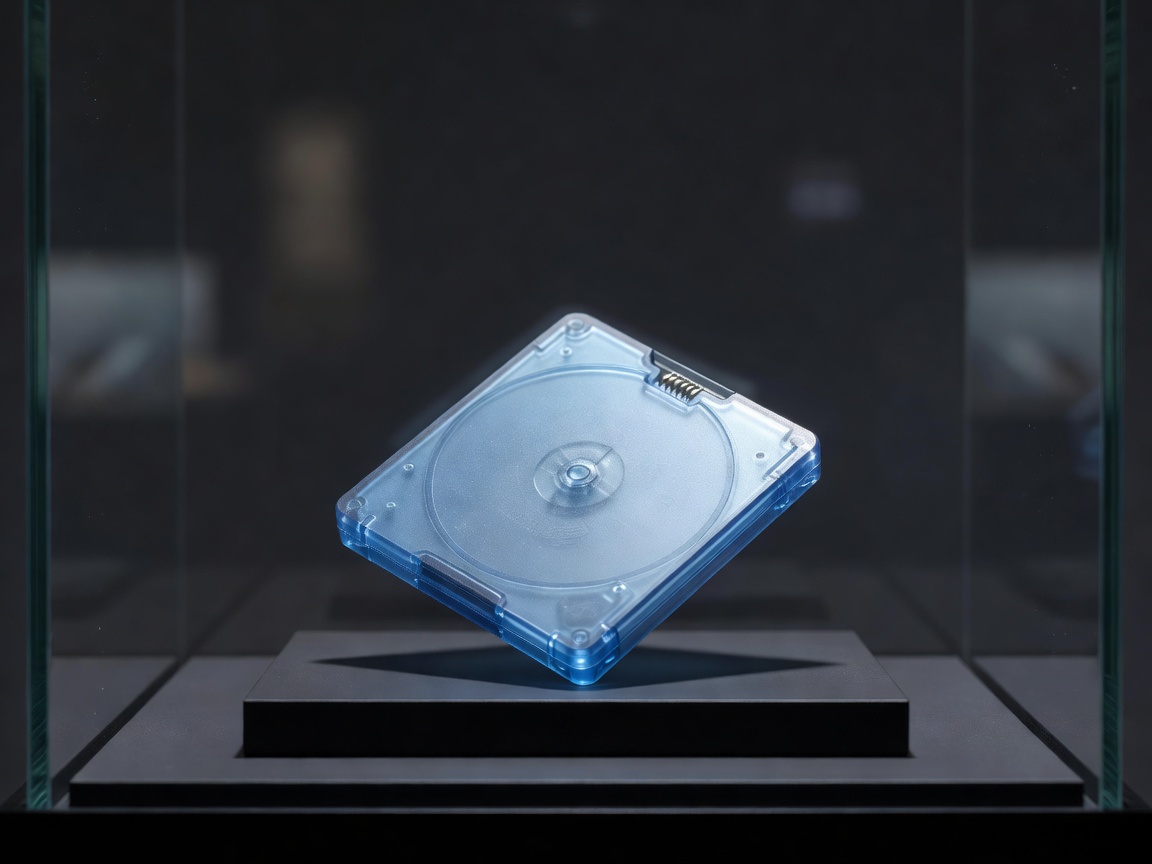
Data today is weightless, stored in distant server farms. But for decades, memory had mass. It was housed in plastic cartridges, spun by motors, and read by delicate magnetic heads. The retrieval of information was an audible, physical process.
The Architecture of the Floppy
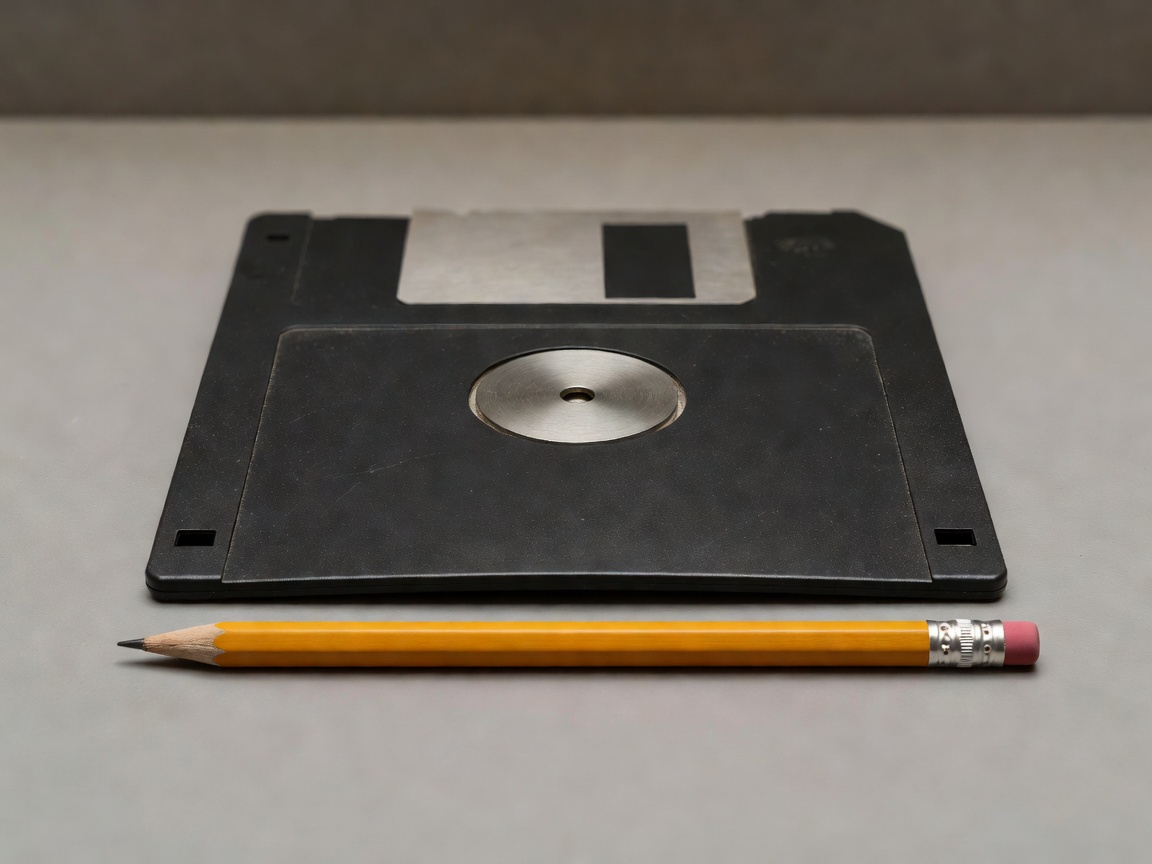
The 3.5-inch diskette is an icon of design. Sliding the metal shutter back reveals the dark, fragile iron oxide disc within. Inserting it into a drive required a satisfying push, culminating in a heavy mechanical 'clunk' as the drive engaged the spindle.
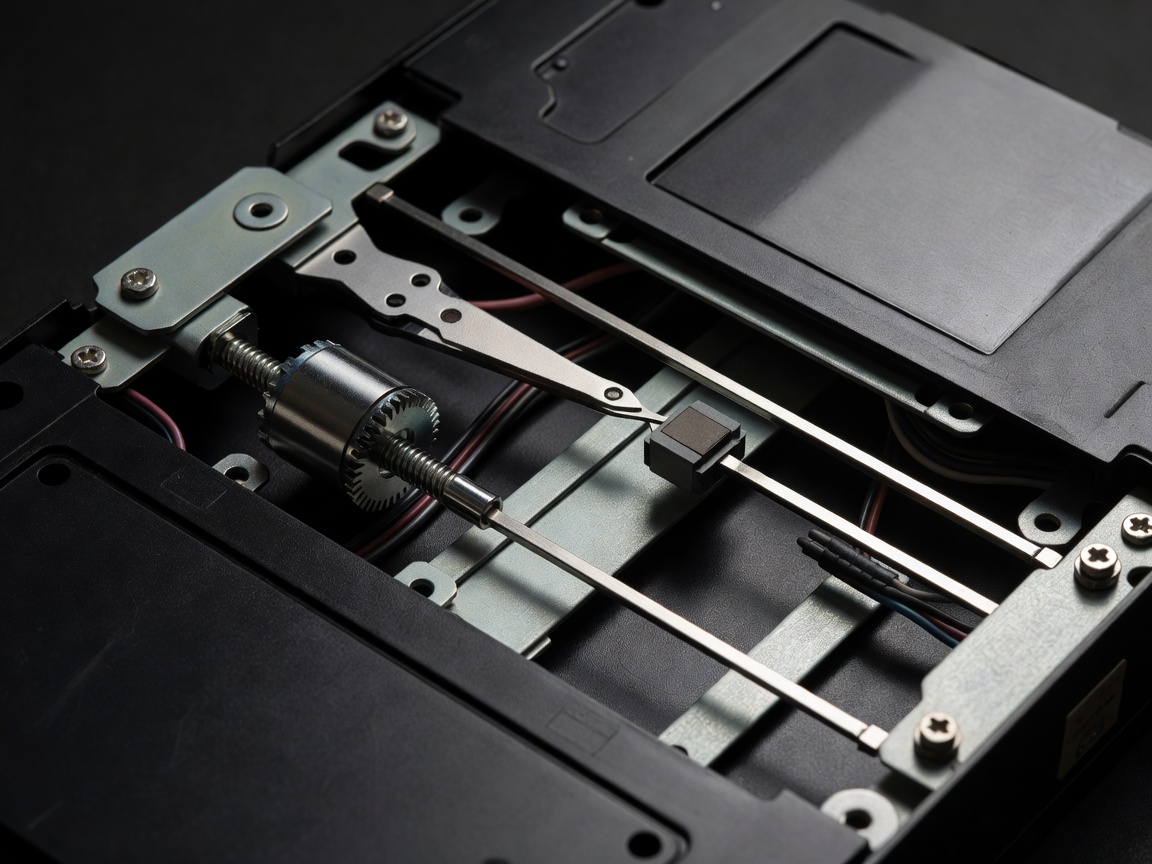
The sound of data loading—the rhythmic, grinding chirp of the stepper motor moving the read/write head across tracks—served as the heartbeat of the 1980s and 90s computing experience. You could hear how hard the machine was thinking.
"The cassette tape and the floppy disk made memory a physical object you could hold, trade, label with a pen, or accidentally destroy with a magnet."
The Videocassette Cartridge
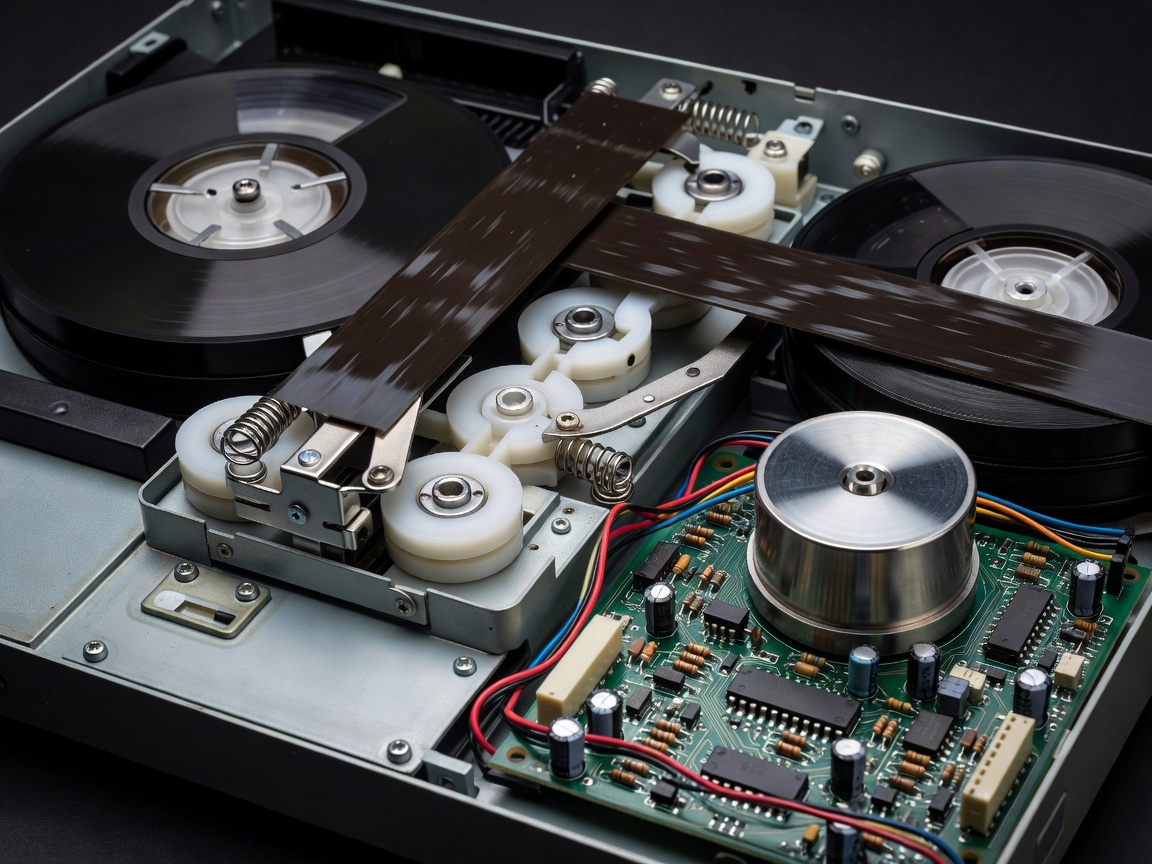
Similarly, the VHS tape turned cinema into a heavy, plastic brick. The mechanical violence of a VCR pulling the tape from its housing and wrapping it around a spinning drum is a marvel of complex household engineering now entirely lost to time.